
Operational outcome
Keep purchasing against the job
Keep what you order, who you buy it from and what it cost tied back to the job that actually needs it.
Without it
Buying the part is easy. Keeping the trail is harder.
Phone calls, emails, supplier invoices and last-minute purchases move quickly. The mess shows up later when someone asks which job paid for it.
The order has no clear job against it.
The part turns up, but accounts and the workshop are left working out where the cost belongs.
Nobody knows whether it has been ordered.
Two people chase the same supplier, or worse, somebody assumes someone else already handled it.
The real buy price changed.
The job was priced from one number, but the supplier charged another by the time you actually ordered it.
Urgent purchases happen outside the normal process.
The job needed the item today, so the paper trail becomes something to sort out later.
The supplier invoice arrives after the job is done.
Now the cost hits finance after everyone thought the project result was already known.
A missing item holds up the workshop.
The schedule says the job is ready, but one untracked purchase is deciding when the work can actually start.
What good looks like
Orders, suppliers and real buy costs stay connected to the job that needs them from purchase through job costing.
With it
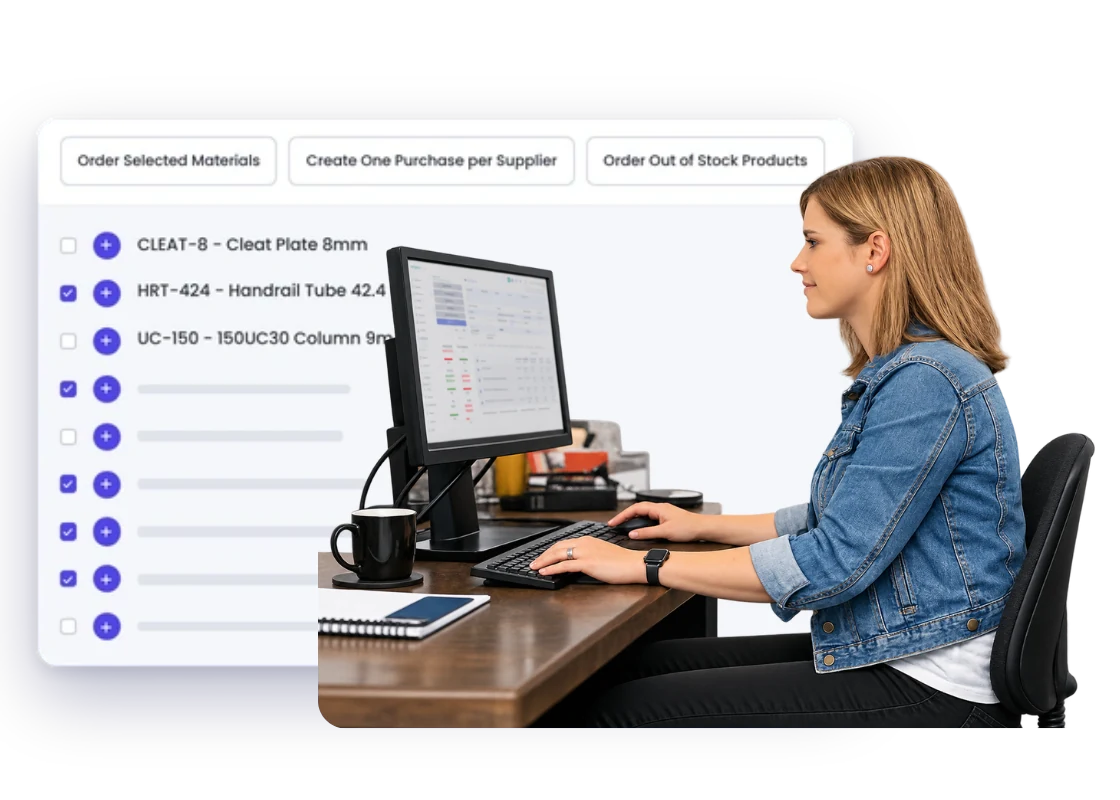
Keep the order with the work it is for.
Project purchasing gets easier when the purchase starts with a clear job and stays connected through the order and real supplier cost. That gives the workshop, office and job costing the same trail to work from.
Has this been ordered yet?
See the purchase trail instead of checking email and memory.
Which job is this for?
Keep the order connected to the work that needs it.
What did the supplier charge?
See the real buy cost rather than the price you hoped to pay.
What are we still waiting on?
See outstanding items before they become tomorrow’s workshop delay.
Did this cost land on the job?
Keep project purchasing visible when the real job cost is reviewed.
How you get there
Take the purchase from need to job cost.
Nothing here is a separate exercise. It is the same job record, kept current as the work moves.
01
Know what is needed
02
Choose the supplier
03
Create the order
04
Tie it to the job
05
Send the order
06
Track what is waiting
07
Record the real cost
08
Review the job
The parts doing the work
What delivers it
These are the features this leans on. Each has its own page if you want the detail.
Purchasing Against Projects
Tie materials, parts and outside costs back to the work that actually used them.
Purchase Orders
Create purchase orders that stay connected to the supplier and the job.
Purchasing
Keep purchasing tied to the work so you know what has been ordered, what is still needed and where the money went.
Also involved
Proof
What it looks like in a real workshop
-
We didn’t wanna pay 100 grand upfront for a program – but then we found WorkGuru.
Nick Mazzella, Administrator, Frontline Trays & Trailers
Fit
Our purchasing is not that formal.
It does not need to become heavy procurement. The useful part is keeping enough of the order trail that the material, supplier and cost still make sense later.
“Our guys buy things on the fly.”
That happens. Keep enough of the purchase trail that the cost can still land on the right job afterwards.
“Some purchases are not for a project.”
That is fine. Project purchasing is for the things that belong to a job; not every business purchase needs one.
“We already enter supplier bills in accounting.”
Keep doing that. The operational question is which job needed the purchase before it becomes just another bill.
“Supplier prices move all the time.”
Then the real buy price matters even more when you compare the job with what you originally allowed for.
Who feels this most
The trades that ask for this first
These are the industries where this comes up in almost every conversation. Pick the one closest to yours.
Next door
Usually asked for together
These lean on the same parts of WorkGuru, so businesses chasing one normally want the other.
Job Cost Control
Watch costs against the quote while the job is still running, not after it has been invoiced.
Workshop Visibility
Know what is on the floor, what is waiting, and what is holding things up.
Job Profitability
Know what the job actually made, not what the quote said it would.
FAQs
Project Purchasing questions
What is project purchasing in a job-based business?
It means keeping orders, suppliers and purchasing costs connected to the jobs that need the material or service.
Can purchase orders be linked to individual projects?
Yes. Keeping the order against the job shows what was bought, what is waiting and where the cost belongs.
Why link supplier costs to jobs before accounting?
Accounting records the transaction. Project purchasing keeps the operational answer to what the purchase was for.
How does project purchasing help with job costing?
Real supplier costs stay with the job, giving you a clearer view of what the work actually cost against the quote.
Can project purchasing handle last-minute orders?
Yes. Urgent buying still happens; keep enough of the purchase trail that the job cost stays useful and accurate.
Can I see items that are still outstanding on a job?
Project purchases show what has been ordered and what the job may still be waiting on before work can move.
See it on one of your own jobs.
Show us what you normally buy for a job and we will show you how the order, supplier and real cost can stay connected.