
Operational outcome
Know what each job actually made
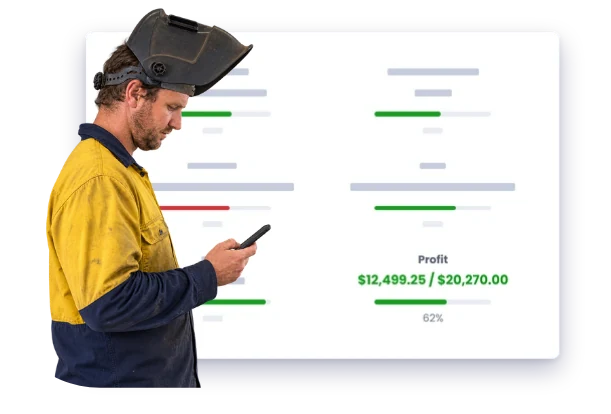
Bring the real labour, purchases, stock and changes back to the job so you can see what it actually made.
Without it
Busy does not always mean profitable.
A job can look fine on the quote and still finish badly once the extra hours, purchases, rework and small costs are added up.
The quote looks better than the final job.
The real hours and costs ended up higher than the allowances you started with.
Labour disappears into the week.
People worked the hours, but not enough of that time made it back to the jobs that used it.
Small purchases add up quietly.
Freight, consumables, outside work and last-minute parts can move the result more than expected.
Extra work gets done without a clear cost.
The customer change might be small, but the labour and materials still come out of the job.
You find out after the job is finished.
By then you can explain the result, but you cannot change what happened on that job.
The next quote repeats the same mistake.
Without the real result from the last job, the next estimate starts from the same assumptions.
What good looks like
You know what the job really cost and can use that result when you price and run the next one.
With it
Know what the job really took.
Profitability gets clearer when the real job is kept together. Hours, purchases, stock, changes and invoicing all need to point back to the work so the final result is based on what happened, not a best guess.
What did we allow for?
Keep the quote and expected job costs as the starting point.
How many hours did we use?
Put the real labour back against the job.
What did we actually buy?
Keep supplier and project purchases with the work.
What did the changes cost us?
Keep extra work visible instead of burying it in the job.
Did this job actually pay?
Compare the real result with what you expected before you started.
How you get there
Build the real job result as you go.
Nothing here is a separate exercise. It is the same job record, kept current as the work moves.
01
Start with the quote
02
Set up the job
03
Record the hours
04
Add the purchases
05
Use the stock
06
Keep the changes
07
Invoice the work
08
Review the result
The parts doing the work
What delivers it
These are the features this leans on. Each has its own page if you want the detail.
Job Costing
Put the real hours, purchases, stock and changes against the job so the result is based on what happened, not what you hoped would happen.
Timesheets
Get everyone’s hours onto the jobs they worked on, so you know what each job is really taking before it’s finished.
Proof
What it looks like in a real workshop
-
We didn’t wanna pay 100 grand upfront for a program – but then we found WorkGuru.
Nick Mazzella, Administrator, Frontline Trays & Trailers
Fit
Is job profitability really that exact?
It does not need to be perfect to be useful. The closer your real hours and costs are to the right job, the better the decisions you can make next time.
“We cannot capture every tiny cost.”
You do not need false precision. Start with the costs that materially change whether the job worked or not.
“Our jobs change too much once they start.”
That makes the real result more important. Keep the changed work and costs with the job as they happen.
“We already know our overall gross margin.”
That tells you how the business went. Job profitability tells you which work helped and which work hurt.
“We do fixed-price work.”
Fixed price makes real cost more important because extra hours and purchases still come out of your side of the job.
Who feels this most
The trades that ask for this first
These are the industries where this comes up in almost every conversation. Pick the one closest to yours.
Next door
Usually asked for together
These lean on the same parts of WorkGuru, so businesses chasing one normally want the other.
Job Cost Control
Watch costs against the quote while the job is still running, not after it has been invoiced.
Labour Cost Tracking
See the hours that went on each job, and what those hours cost you.
Faster Invoicing
Invoice off what was recorded on the job, so nothing gets missed and nothing sits waiting.
FAQs
Job Profitability questions
How do I calculate profitability on individual jobs?
Compare the job’s revenue with the real labour, purchases, stock and other costs that were used to complete it.
Why is job profitability different from business profit?
Business profit shows the overall result. Job profitability shows which jobs made or lost money along the way.
Can I see job profitability before the job is finished?
You can track actual costs against the job while work is underway, then review the final result once it is complete.
How do labour hours affect job profitability?
The hours people spend on the job form part of its real cost, even when the customer is not billed by the hour.
Do purchases and stock need to be linked to the job?
Keeping them against the job gives you a more complete view of what the work actually cost to deliver.
Can completed jobs help us quote future work better?
Yes. Real job results give estimators better information about the hours and costs similar work actually required.
See it on one of your own jobs.
Bring us a completed job and we will show you how its real hours and costs can build a clearer profitability picture.