
Job Costing & Finance
Know what the job is really costing.
Put the real hours, purchases, stock and changes against the job so the result is based on what happened, not what you hoped would happen.
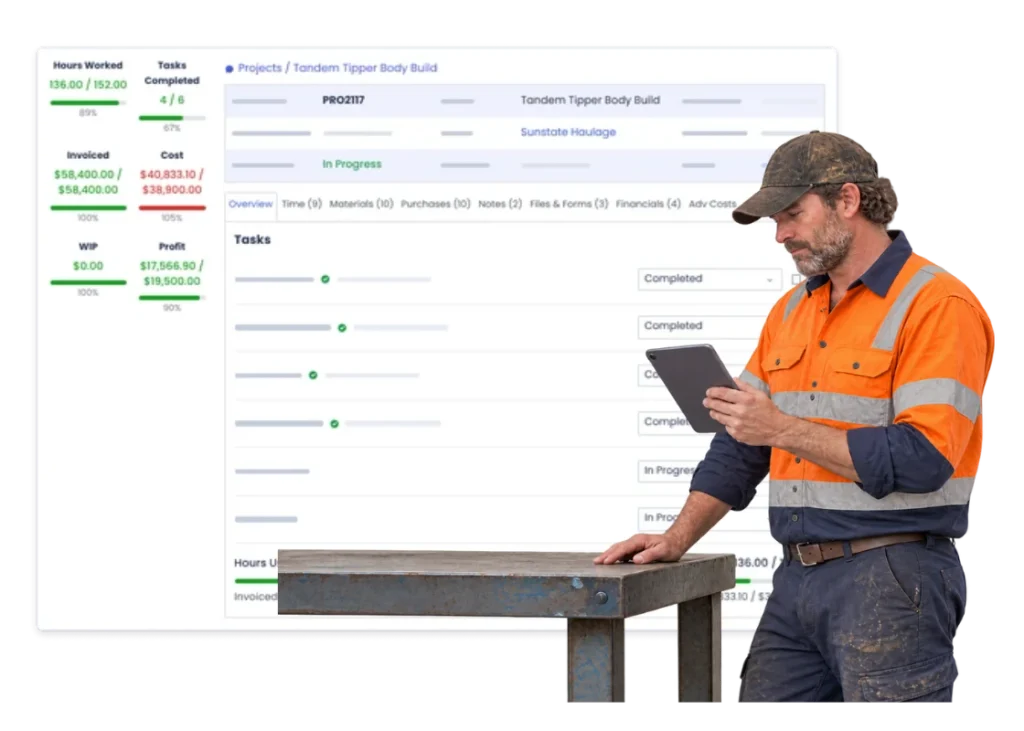
Overview
The quote is the plan. Job costing is the reality.
You allowed for the hours. You allowed for the material. Then the actual job happened.
Someone spent longer on it. A supplier price changed. More material was used. The customer added something. There was rework.
Job costing keeps those real costs with the work so you can see how the job is tracking and what it actually took when it is done.
What’s inside
What you get
01
Labour actuals
Use timesheet hours as part of the real job cost.
02
Purchase actuals
Keep real supplier spend against the project.
03
Stock usage
Put material taken from inventory against the work.
04
Quote comparison
Use the original allowance as the benchmark.
05
Changes and extras
Keep added work visible in the result.
06
Job history
Look back at what similar work actually took.
The reality
Why you need it
The labour allowance disappears quietly.
A few extra hours at a time can eat the job before anyone notices.
Purchases land somewhere else first.
The cost exists, but the project manager does not see it until much later.
Stock leaves the shelf without hitting the job.
The job looks better because the material cost is missing.
Extra work gets mixed into normal time.
The customer change still used hours and material whether it was billed separately or not.
The review happens after the job is over.
By then you can explain the cost blowout but you cannot change that job.
The next quote starts from memory again.
Without a real result, the same bad allowance can get used twice.
How it works
How it works
01
Start with the allowance
02
Record job time
03
Keep project purchases
04
Use stock on the job
05
Capture extra work
06
Check actual against expected
07
Finish the job
08
Use the result next time
Capabilities
What it does
Capability
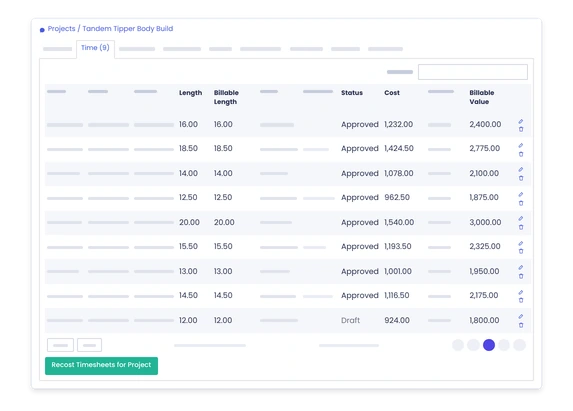
Labour actuals
Use timesheet hours as part of the real job cost.
Capability
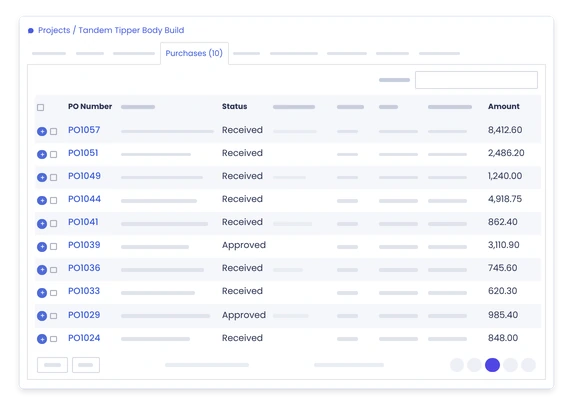
Purchase actuals
Keep real supplier spend against the project.
Capability
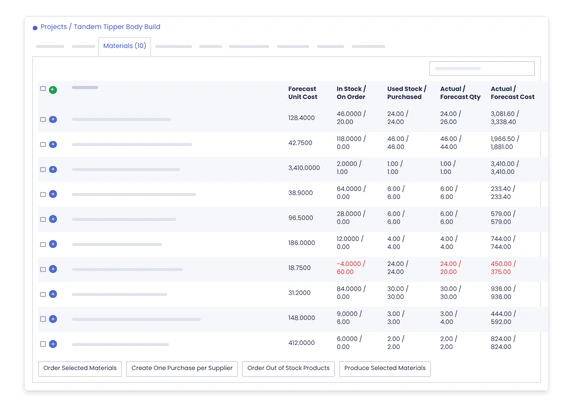
Stock usage
Put material taken from inventory against the work.
Quote comparison
Use the original allowance as the benchmark.
Changes and extras
Keep added work visible in the result.
Job history
Look back at what similar work actually took.
Day to day
What does that actually look like?
You allowed 100 hours and you are at 86.
See it while there is still work left instead of after the job is closed.
Steel comes in higher than quoted.
The job gets the real purchase cost, not the old supplier price.
The team remakes a part.
The extra time and material belong in the real result.
The job finishes under the quoted price but used far more labour.
See why the result changed instead of only looking at revenue.
Another similar quote comes in.
Use the last job’s real hours and costs as a better starting point.
What you get out of it
What changes
Catch cost blowouts earlier
See the little overruns before they become the final result.
Know what the job really took
Bring labour, material and purchases together.
See which work actually performs
Compare jobs instead of relying only on overall business numbers.
Quote with better history
Use completed job results when similar work comes back.
Stop missing hidden costs
Make stock, freight, rework and extras part of the job picture.
-
Discovered their contract work wasn’t profitable.
We didn’t wanna pay 100 grand upfront for a program – but then we found WorkGuru.
Nick Mazzella, Administrator, Frontline Trays & Trailers
Fit
Will it work the way we do things?
“We cannot capture every tiny cost.”
You do not need false precision. Start with the costs that materially change whether the job worked.
“Our jobs change too much.”
That makes the real result more useful, not less. Keep the changed work and costs with the job.
“We already know our overall gross margin.”
That tells you how the business went. Job costing tells you which work helped and which work hurt.
“We do fixed-price work.”
Then real job cost matters even more because extra hours and purchases still come out of your side.
“We only review costs monthly.”
Keep the monthly review, but a current job view gives you a chance to act before the work is finished.
By trade
Where this gets used
Works with
Connected features
Timesheets
Bring actual labour into the job.
Purchasing Against Projects
Keep supplier costs where they belong.
Stock on Projects
Put used inventory into the job cost.
Quoting & Estimating
Start with the expected cost before actuals begin.
Variations
Keep changed work and extra cost visible.
Reporting
Look across completed jobs and find the patterns.
FAQs
Job Costing questions
What costs should be included in job costing?
Start with the meaningful job costs such as labour, purchases, stock, outside work, freight and major extras.
Can I see job costs before the job is complete?
Yes. Current labour, purchases and other recorded costs can be reviewed while the work is still underway.
How do timesheets affect job costing?
Hours recorded against the job form part of the real labour cost and show where the team’s time actually went.
Can purchases be included in the real job cost?
Yes. Purchases linked to the project keep real supplier spend with the work that needed it.
Can stock used from our own inventory be costed to a job?
Yes. Recording stock usage against the project keeps inventory and the job cost aligned.
Is job costing the same as business profitability?
No. Business profitability is the whole company result; job costing shows what individual work actually took.
See what one real job actually took.
Bring us a completed job and we will show you how the labour, purchases and stock build the real cost picture.